I’m Famous!

Ok, det kan godt være at jeg ikke er heeelt kendt nok til at kunne læne mig tilbage og leve af champagne og udelukkende bruge min tid på at gå til smarte præmiere, som jeg bliver inviteret til – blot fordi jeg er kendt.

Men efter jeg (sammen med Anders) blev interviewet af KanalTux til OpenSource Days tror jeg ikke det er farligt at konkludere, at jeg er et stort skridt videre på vejen til det søde champagne liv.

Bedøm selv

[S01E02c] Ubuntu Danmark from Kanal TUX on Vimeo.

Jeg syntes interviewet gik helt fint, og KanalTux folkene stillede nogle fornuftige spørgsmål.

Jeg ville dog have ønsket, at jeg havde husket en enkelt lille ting til spørgsmålet om hvorfor jeg startede med Ubuntu og hvorfor jeg bruger Ubuntu.

Linux for human beings
Ideen om at Linux skal være mennesker syntes jeg er et super udgangspunkt for arbejdet med en distribution. Det betyder selvfølgelig ikke at andre distributioner (og styresystemer for den sags skyld) er til ikke-mennesker…
Men specielt for en del år siden var der en meget hård tone i store dele af Open Source bevægelsen (og i tekniske miljøer generelt). Yderligere var en del Linux distributioner designet med en ide om at brugere og udviklere var en og samme gruppe. Det gav god mening for udviklerne – de fik et styresystem med de redskaber og værktøjer, som de selv ønskede. Men almindelige mennesker (i mangel af et bedre ord for folk, som ikke nødvendigvis har programmør-evner eller meget teknisk erfaring) blev ladt lidt i stikken.
Som det blev nævnt i interviewet så har en person uden stor erfaring med de forskellige software programmer hverken brug for eller forudsætninger for at tage stilling til hvilket program, der skal bruges som web-browser, hvilket skrivebordsmiljø der skal anvendes osv.
Almindelige mennesker har brug for at disse valg er truffet på forhånd (med muligheden for selv at vælge, hvis man har specifikke ønsker) og har brug for at alting virker, uden at man behøver at rode med terminalen eller kerne-patches. Tilbage i 2005 var det klart min opfattelse at Ubuntu var den distribution, som havde størst fokus på at muliggøre brug af Linux for almindelige mennesker.
Det var noget i den retning jeg skulle have svart. Men det er jo nok i det store billede en detalje.

Hvis du har lyst til at se hele KanalTux indslaget fra Open Source Days (som også havde interviews med Kris Thomsen om Fedora og Leif Lodahl om LibreOffice), så klik her eller her.
Ubuntu Cafe på Vesterbro mandag d. 7. marts

Mandag d. 7. marts afholdes den første Ubuntu Cafe i København, nærmere betegnet på Restaurant Carlton på Halmtorvet.

Her i København har vi jo længe stået tilbage for Ubuntu Aarhus, som i ca. et år har mødtes i Århus og arbejdet med forskellige aspekter af Ubuntu.
Så nu er det på tide at vi i hovedstaden viser hvad vi kan ;)

Efter længere tids snak og planlægning har Michael taget initiativ til at vi mødes på Carlton (tæt på hovedbanegården). Da det er første gang vi afprøver konceptet, er det også meget op til de fremmødte hvad vi skal lave – men det er i hvert fald helt sikkert at man kan få support og install-hjælp på dagen. Der vil garanteret også blive mulighed for at få introduktion til oversættelses- og bug-arbejde.

Der er oprettet en Facebook begivenhed (og en begivenhed på LoCo Directory) hvor man kan tilmelde sig, til hvis man kommer. (Det er absolut ikke et krav, men det er altid meget rart at have et gæt på hvor mange der dukker op.)

Forhåbentlig kan vi få en rigtig godt tradition for at mødes den første mandag i måneden stablet på benene, så vi kan få endnu mere Ubuntu aktivitet i København (og omegn), og så vi kan få lave noget arbejde på Ubuntu, således at vores Linux distribution kan blive endnu bedre end den allerede er!

Open Source Days
Her til sidst kan jeg jo ikke lade være med at blære mig lidt (ligesom Pretty Maids), med at jeg – sammen med Anders Jenbo – blev interviewet af Kanal Tux om Ubuntu til Open Source Days. Selvom det jo ikke er første gang jeg har stået foran et kamera i Ubuntus ‘tjeneste’, så glæder jeg mig meget til at se hvad de unge, smukke, objektive journalist-podcastere fra KanalTux får klippet sammen :)

Kattekillinger

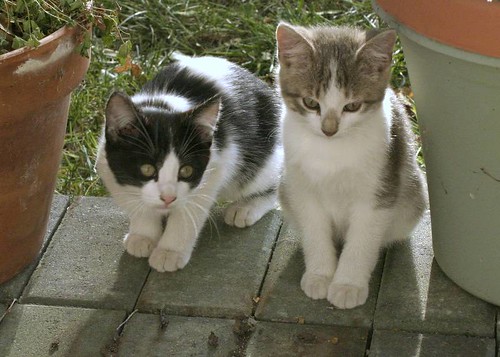
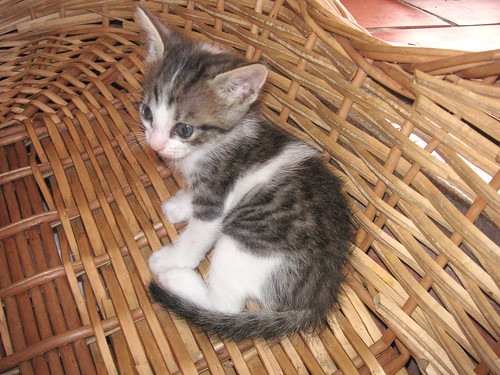
De er jo søde, killingerne.

Kittens
Kittens by Karin Dalziel

Det ville vist være forkert at tale om en afbrydelse af det normale indhold her på bloggen, da min indlægs-frekvens efterhånden er ved at være relativt lav.
Men da det er min blog behøver jeg jo ikke forsvare mit valg af indhold. I dag kan du her se på søde katte og ikke så meget andet.
Så uden yderligere udenomssnak følger her billeder af søde kattekillinger.

Cute kitten
Cute kitten by Beatrice Murch

Perhaps the cutest kitten in the world.
Perhaps the cutest kitten in the world by Heather Hopkins

More kittens!
More kittens! by Michael Richardson
“Dumme kat, du har jo helt misforstået konceptet. Det er jo ikke en hat, det dér! Altså…”

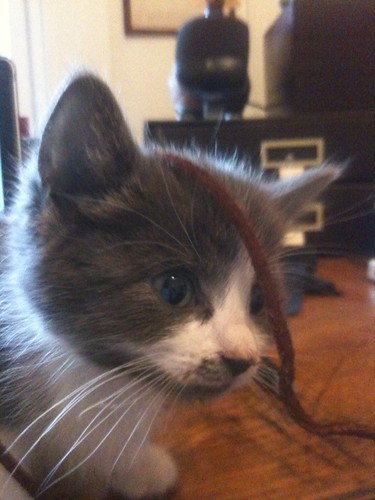
Cute kitten pic
Cute kitten pic by Tom Raftery

Jeg har i øvrigt en ven som har gjort det muligt at søge på Google mens man kigger på en sød kattekilling. Hvis du har brug for en daglig dosis sød kat, så kan jeg vart anbefale meowgle.com, som gør det muligt at søge på nettet, samtidig med at du kan se på katte killinger.

Hvad er i øvrigt dit ynglings billede af søde katte?

Bitcoin

I recently stumbled upon Bitcoin, which is a digital currency enabling (among other things) anonymous money transfers without any central control.

Given your point of view that can either be a very good or a very bad ting.
Often an economy outside control or regulation of regular society is associated with criminal activities. But as was shown when the big credit card companies and PayPal (and others) turned off Wikileaks ability to receive funding (even though no court had ruled Wikileaks illegal), a currency with these attributes seems to have some justification.
Anyway, since the technology exists, my opinion for or against is really irrelevant. It is out there, and can’t really be shut down (without shutting down mostly the entire internet, or installing government spy-ware on each and ever computer in use today).

For details about the technical implementation or the economical aspects of Bitcoin I will refer you to the Bitcoin faq, but so far what I’m really missing is places to actually pay with Bitcoin.
The few places that do accept Bitcoin just aren’t enough, so for now the technical aspects are what fascinates me, but if the project takes off, shopping with Bitcoin in the future doesn’t seem to unrealistic.
If anyone out there know of any great sites that use Bitcoin today (besides the ones listed on the Bitcoin homepage) or have great ideas for some places where Bitcoin could be useful, feel free to share.

Edit, november 2017: Removed key, as I no longer have the private-key, and changed links from bitcoin<dot>org to bitcoin.com

So ein Ding anmeldte Ubuntu

I tirsdags anmeldte Nikolaj Sonne Ubuntu i So ein Ding.
Hele programmet kan ses her.

Min oplevelse var at det var en helt fair anmeldelse. Nikolaj gjorde det fra starten klart at anmeldelsen var på baggrund af hans 15 år som Windows bruger, 5 år som Mac bruger, og så en testperiode af Ubuntu på små 3 uger.

Der var derfor funktionaliteter fra både Mac og Windows han manglede i Ubuntu – og det vil der jo altid være når man skifter operativ system.
Personligt savner jeg muligheden for at holde ALT nede og flytte et vilkårligt vindue med musen, uden at skulle finde det pågældende vindues menu-linje, når jeg befinder mig på Mac eller Windows. Det er nok først når man skifter system, at man rigtig lægger mærke til de små features man bruger meget på sit favorit system.

Nikolaj løb også ind i nogle hardware problemer – og selvom det selvfølgelig er super ærgerligt at han har været uheldig med sin kombination af hardware og understøttelse i Ubuntu, så kunne han sikkert også have fundet noget hardware, som slet ikke ville være understøttet. Det er desværre ikke alt hardware, der er understøttet i Linux endnu…

Det som jeg bed mest fat i, i programmet, var dog afslutningen, hvor Nikolaj berørte problemstillingen at det nærmest er umuligt at købe en computer uden en medfølgende Windows licens…. Som han så poetisk udtrykker det:

Det svarer lidt til at gå ind til bageren og købe et brød og så ikke få lov til at komme ud med brødet før du også køber en spand Nutella.

Jeg glæder mig meget til at se hvad han ender med at gøre ved det!

Hvis du efter at have set programmet føler at du har mod på at prøve Ubuntu så kan det hentes her (den side har også en fin guide til hvordan du brænder en cd og hvordan installationen af Ubuntu foregår).
Hvis du skulle gå hen og få brug for hjælp til installationen, hjælp til at få din eksotiske hardware til at virke eller har brug for et tip til hvilke programmer der er bedst til at organisere dine billeder, så kan jeg varmt anbefale forumet http://ubuntudanmark.dk/forum/ . Her kan du altid få hjælp til dine Ubuntu relaterede spørgsmål.

Nyt design til UbuntuDanmarks hjemmeside

Efter et fantastisk arbejde (primært af Anders Jenbo) har UbuntuDanmarks hjemmeside endelig fået et nyt design og nyt indhold.

Designet er baseret på det samme design som den officielle www.ubuntu.com hjemmeside, men er blevet tilpasset vores behov. Vi har fået en udvidet menustruktur og en integrering af forumet, som kører på phpBB. Resten af siden kører på WordPress.

Der er stadig enkelte fejl i designet, men Anders arbejder på livet løs, og de relaterer sig mest til mere eksotiske funktioner på forumet. Brugeroplevelsen skulle altså være mindst lige så god som før det nye design blev taget i brug tidligere i går.

Kommentarer eller ideer til det nye design eller det nye indhold kan gives her på forumet.

Running a Diaspora pod on Ubuntu 10.10

Edit: Since Diaspora has switched from mongo db to mysql, the procedure below is now outdated. I may or may not update this page, or write a new guide.

During the holidays I have had some time to look into Diaspora.
Diaspora is a distributed social network, with a focus on privacy, security and ownership of ones own content. Everyone is free to run their own pod, and users on different pods can connect and communicate with each other. (Diaspora servers are called pods). The Diaspora software is still being developed and is in an alpha state.

Installing Diaspora
There is a great guide to installing Diaspora on Mac OSX, Ubuntu or Fedora here.
On Ubuntu 10.10 it boils down to this.

First install some required packages.
sudo apt-get install build-essential libxslt1.1 libxslt1-dev libxml2 ruby-full mongodb libssl-dev imagemagick libmagick9-dev git-core redis-server rubygems
sudo gem install bundler
sudo ln -s /var/lib/gems/1.8/bin/bundle /usr/local/bin/bundle

Then get Diaspora and the required gems.
git clone http://github.com/diaspora/diaspora.git
cd diaspora
bundle install --path vendor

Configure Diaspora and nginx
cd config
cp app_config.yml.example app_config.yml

now edit app_config.yml and change the hostname. If you want your pod to be able to send e-mail also edit the mailer_on and smtp_* entries. All the rest is for more advance settings, and your pod should run just fine with the default settings.

One last thing that needs to be set up, before you can enjoy your very own Diaspora server is a proxy, so that requests sent to port 80 are routed to port 3000.
I use the nginx server, as recommended.

Create a file called diaspora in /etc/nginx/sites-available with this content (where you of course change name-of-your-domain to the relevant string):

server {
        listen   80;
        server_name  diaspora.name-of-your-domain;
        access_log  /var/log/nginx/diaspora.name-of-your-domain.access.log;
        location / {
                proxy_pass http://name-of-your-domain:3000;
        }
}

Activate it with
sudo ln -s /etc/nginx/sites-available/diaspora /etc/nginx/sites-enabled/diaspora
Then restart the nginx server with
sudo /etc/init.d/nginx restart

Finally, if you also want to allow the users of your pod to propagate their status to Twitter and Facebook, you should follow this easy guide on how to configure the oauth_keysm.yml file.

You should now be able to start your pod by issuing
./script/server
from the diaspora directory.

Running Diaspora
However, this way of starting the pod can result in an inability to add contacts from other pods. So inspired by this you can do the following.

sudo update-rc.d -f redis-server remove
sudo sed -i 's/daemonize yes/daemonize no/' redis.conf
sudo /usr/bin/redis-server /etc/redis/redis.conf &

(You will need to start the redis server each time you reboot your host, or if the server fails in other ways.)

Now, each time you want to start your Diaspora pod run the following three commands from the diaspora directory. Wait for one service to start, before starting the next.

ruby script/websocket_server.rb &

QUEUE=receive,mail,receive_local,socket_webfinger,http_service,http,receive_salmon bundle exec rake resque:work &

bundle exec thin start -p 3000 -e development &

You can of course do this more elegantly, by wrapping it up in some scripts, but hopefully you get the idea. So instead of using the script/server script I use those three commands to start my pod.

Now your pod should finally be ready for use.

Now what?
So, should everyone run their own server? Properly not. Diaspora is still so early in the development process that normal users should think twice before using it. The features are limited, and there are still plenty of bugs.

But if you want to see what it can do, look for bugs or are just curious, then why not?. However, you don’t need to run your own pod for that. There are plenty of pods out there that accept new user signups.
Take a look at the list over here: http://podup.sargodarya.de/.

You should also feel free to use my pod, located at diaspora.compadre.dk.
What ever you choose to do, please note that this is still alpha-software, and should be treated as such.

If you need someone to add as contact for testing purposes, feel free to add me: soeren_b_c@diaspora.compadre.dk.

For more info about Diaspora see:

https://joindiaspora.com/ – the official Diaspora website, that also hosts a pod, run by the core developers. Currently the pod at joindiaspora.com is closed for new signups, but due to the distributed nature of Diaspora any pod should be fine, as long as you trust the people running the pod.
http://podup.sargodarya.de/ – list of running pods.
http://en.wikipedia.org/wiki/Diaspora_%28software%29 – Wikipedia article

Slicehost vs. Linode vs. ???

I have some projects in mind that would require some hosting – and not just some casual web-hosting, but actual root access.

If I will ever get the time to work on the projects is another issue, but the first step would be to actually get some hosting.

A quick Google search seem to indicate that Slicehost and Linode pretty much provide what I’m looking for, at a reasonable price.

So far I’m leaning towards Linode. Mainly because they have a data center in London, and I might as well have the host as close to me as possible, should all cables across the Atlantic suddenly be severed.
They also seem to have a little lower prices on what to me looks like comparable products. But I haven’t made up my mind yet.
If you have any experience with either of the two companies I would appreciate your thoughts in the comments below.
Also, if you know of companies that provide similar services (within the same price range), let me know, but my quick Google search seems to come up with only the two companies.

Thank you in advance.

Intellectual Monopolies and other stories from FSCONS

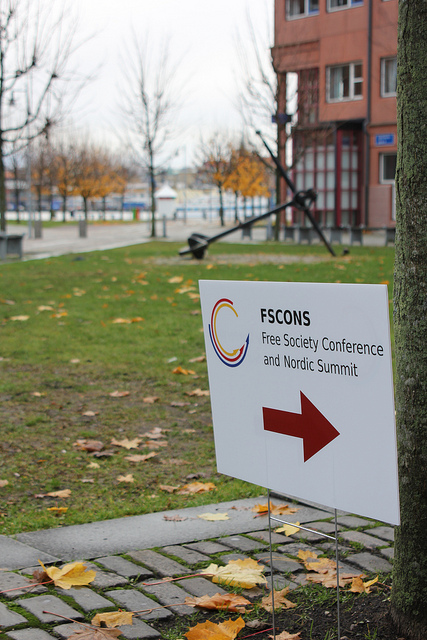
I spent the weekend in Gothenburg, Sweden, attending the FSCONS conference.


Image by: Mathias Klang.

First things first, the most important thing I brought home with me from Sweden is that we should start changing the way we talk about ‘Intellectual Property‘, and start calling it what it really is – Intellectual Monopoly.

Glyn Moody held a keynote entitled Ethics of Intellectual Monopolies (slides here). His point was (among other things) that we should start calling what is currently known as Intellectual Property (IP) what it really is, namely Intellectual Monopoly. Because copy-right and patents are just that – a monopoly granted by society to an author or inventor.
And we all know monopolies are bad! This will help people understand more clearly that these monopolies are harmful to society and need to be abolished (or at the very least weakened). To those who claim that the current rules and laws can’t be changed and are somehow set in stone, Glyn had a very good point, namely that they can be changed. They have been changed before through history, and of course they can be changed again.
The first copyright was limited to 14 years – compare that with the lifetime copyright of today. Through time there has been an increase of the time copyright was held. Nothing ensures that we could not start decreasing the time that an author is granted copyright.

If you want to do some more reading on this topic, Glyn recommended this book:
Against Intellectual Monopoly

Besides a lot of interesting talks I also met up with Andreas and Anders for a miniature Ubuntu-nordic meet-up to share stories and ideas. One thing the Swedish team is doing, that I hope we can start doing in the Danish team as well, is putting the translated Ubuntu documentation online in Swedish.
It is the same informations as can be accessed through the help menu in any Ubuntu system, but when you are looking for support, having such documents online can be a great resource. The documentation is online in English at the help.ubuntu.com website, and the Swedish team has put the translated Swedish documentation online at help.ubuntu-se.org. The translation work has already been done, so putting the Danish documentation online shouldn’t be that big of a problem.

In general I very much enjoyed the FSCONS venue and the people there. It made me happy to see a lot of Ubuntu installs on the different laptops and netbooks as well.

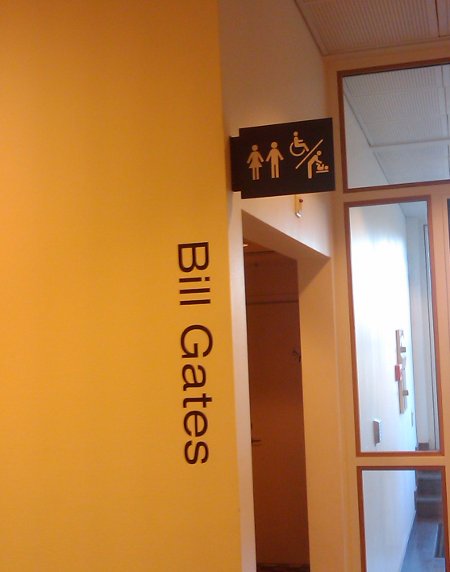
It was no coincidence that most rooms and walls in the building had little computer-related names printed on to them. Normally the building houses the IT faculty. In one room the names of old video-games decorated the walls, other rooms had famous computer people, special keyboard key names or similar printed… and look whose name I found next to a toilet on the ground floor:

Great Succes!

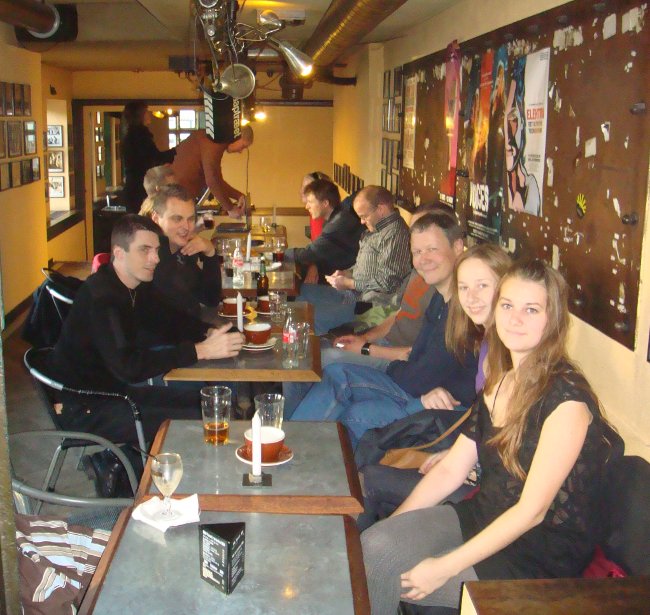
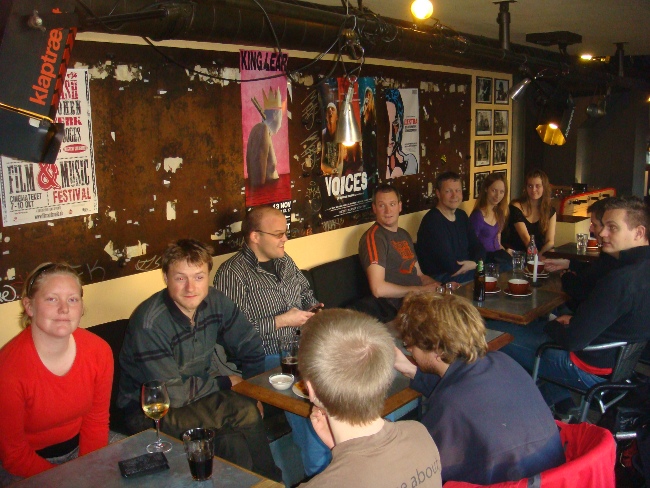
Ubuntu 10.10 has been released, and here in Copenhagen we managed to gather a nice group of people at the local Café Klaptræet, for a relaxed release party get-together.

With only three days notice I was pleasantly surprised by the big turnout, and I think it is something we should consider doing again. Sometimes there doesn’t need to be an agenda, and talks and the like.
Sometimes it’s just nice to meet up and have a soda, coffee or beer with other Ubuntu and Free Software users, while sharing thoughts and ideas about Ubuntu, software and life in general.

I haven’t had much time to look at the new Ubuntu release, but hopefully I will have time to look into it in more detail when I have my fall vacation in one weeks time.

Other Ubuntu users around the world will be celebrating the release in the coming days as well. Feel free to share your release party stories and links to photos in the comments below.